Aider v2 -08952

Doing business in Poland – A practical guide for Swedish companies

Poland has one of Europe's most dynamic business environments

The country combines a large and well-educated workforce, competitive labor costs, and full EU membership with the free movement of goods, services, and capital. Many Swedish companies have already established manufacturing facilities, service centers, or sales companies in Poland—and more are following suit.


However, establishing and operating a company in Poland involves a comprehensive set of regulations governing accounting, taxation, VAT, and labor law. The rules are detailed, differ in some respects from those in Sweden, and are subject to regular changes.


Aider Polska (aidergroup.pl) is your partner in Poland—we handle bookkeeping, payroll administration, annual reports, and ongoing tax compliance for Swedish companies operating in the Polish market.

Please contact us to schedule a call
AIDER-Oslo-People--3 (1)-2

The company is registered—what happens next?


Registering a Polish sp. z o.o. (limited liability company, Poland’s equivalent of a corporation) is relatively quick through the digital KRS registry. The minimum share capital is PLN 5,000 (approx. EUR 1,200). The company is assigned a NIP (tax ID number), a REGON (statistical number), and, if necessary, a VAT number.


What takes time and requires careful attention is what happens after registration: establishing the proper processes for accounting, VAT reporting, payroll, and tax returns. This is where most problems arise.


Accounting in Poland – Ongoing Requirements


All Polish companies are required to maintain ongoing accounting records in accordance with the Polish Accounting Act (Ustawa o rachunkowości) or IFRS.


Accounting must be conducted in Polish zloty (PLN) and documented in Polish. Financial statements and reports from a parent company in Sweden do not satisfy the Polish requirements.


Poland uses the JPK (Jednolity Plik Kontrolny) system—standardized digital report files that the tax authority may request. The most important file is JPK_V7, which combines the VAT register and the VAT return into a single file. The file is submitted monthly (JPK_V7M) or quarterly (JPK_V7K) and contains detailed information on all incoming and outgoing transactions, VAT rates, GTU codes, and procedure codes.


Errors in JPK reporting are one of the most common causes of tax audits. Setting up the correct mapping from the company’s transactions to the JPK structure is a key part of our onboarding process for new clients.


The annual report must be approved by the general meeting no later than three months after the end of the fiscal year (i.e., March 31 for companies with a calendar year) and submitted to the KRS within 15 days. The audit requirement takes effect when the company meets at least two of the following three criteria for two consecutive years: total assets exceeding PLN 2.5 million, revenue exceeding PLN 5 million, or an average of more than 50 employees.


Outsourcing your bookkeeping and accounting to Aider Polska means that we assume full operational responsibility for day-to-day accounting, JPK reporting, interim financial statements, and the annual report. This frees up time for your management team and eliminates the risk of costly errors in a regulatory system you aren’t familiar with.

VAT in Poland – Registration and E-Invoicing

Polish VAT has a standard rate of 23%. Reduced rates of 8% and 5% apply to selected categories of goods and services.


Swedish companies that conduct VAT-liable activities in Poland—such as the delivery of goods located in Poland, assembly or installation, warehousing for resale, or certain B2C services—may be required to register in Poland. Registration is done via the VAT-R form and results in an active Polish VAT number.


KSeF – Mandatory E-Invoicing


Starting February 1, 2026, mandatory e-invoicing via the national KSeF (Krajowy System e-Faktur) system will apply to the largest taxpayers, and starting April 1, 2026, to all others. All invoices must be issued and received via the KSeF system. This affects invoice flow, access permissions, archiving, corrections, and integration with JPK reporting.


KSeF is not an IT project—it is a process change. Aider Polska manages KSeF implementation, access rights configuration, and day-to-day invoice processing.

Please contact us to schedule a call
AniaC

Payroll Administration and Employees in Poland


One of the major advantages of Poland is access to a well-educated and relatively cost-effective workforce. However, Polish labor law differs significantly from Swedish labor law. Payroll costs, social security contributions, and termination rules require a thorough understanding of local regulations.


Minimum Wage and Employer Costs


The minimum wage in Poland is 2,025 PLN ( 4,666) per month (gross), equivalent to approximately 1,100 EUR. Employer contributions to ZUS (Polish social security) amount to approximately 20% of the gross wage. In addition, there is workplace accident insurance, for which the premium rate varies by industry.


The total employer cost for an employee in Poland is thus significantly lower than in Sweden—but still not negligible. Accurate calculation is important as early as the budgeting phase.


Tax Withholdings and Payroll Reporting


The employer is required to withhold and report preliminary income tax (A-tax) based on the employee’s tax card. Payroll reports are submitted monthly to ZUS and the tax authority. The Polish payroll system requires specific local expertise—an incorrect report can result in fines and late fees.


Employment Contracts and Termination


Polish labor law requires written employment contracts. Notice periods depend on the length of employment and are regulated in detail by the Labor Code. Incorrect termination procedures are one of the most common causes of labor disputes in Poland.


Aider Polska’s payroll team handles the entire payroll process for Swedish companies’ Polish employees: payroll processing, ZUS declarations, tax reporting, vacation calculation, employment contracts, and HR administration.


Corporate Income Tax (CIT)


Corporate income tax in Poland is 19% on taxable income. For companies with revenue under EUR 2 million , a reduced rate of 9% applies . Tax losses can be carried forward for up to five years (maximum 50% per year).


The corporate tax return must be filed no later than June 30 of the year following the tax year and can only be filed electronically. The tax year is normally the calendar year but can be changed.


An important issue for Swedish companies operating in Poland is whether a permanent establishment arises in Poland. This can give rise to CIT liability in Poland even if the legal entity is based in Sweden. This depends on factors such as the number of employees in Poland, whether staff have the authority to enter into agreements on behalf of the company, and how long the operations have been ongoing. CIT and VAT analyses should always be conducted in parallel.

Our Service—Comprehensive Support for Your Business in Poland

Aider Polska offers Swedish companies a full range of services for their Polish operations:


  • Ongoing bookkeeping and financial reporting in accordance with Polish law and IFRS
  • Outsourcing of accounting functions —we become your finance department in Poland
  • Annual reports and filing with the KRS
  • VAT registration and tax compliance —VAT-R, JPK_V7, KSeF, corporate tax returns
  • Payroll administration —payroll processing, ZUS declarations, employment contracts, HR administration
  • Advice on permanent establishments, transfer pricing, and withholding tax


Would you like to learn more about how we can help your company in Poland? Contact Aider—we’ll connect you with the right expert at Aider Polska (aidergroup.pl).
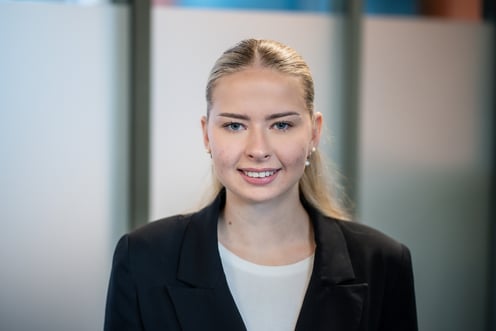
Please contact us to schedule a call
Aider v2 -08731-1

Please contact us to set up a call!